18–20 July 2025 · Uttar Pradesh
Agra beyond a single postcard
The Taj Mahal anchors this journey, but the camera keeps moving—through a fort, an abandoned imperial city, and gardens where the famous silhouette becomes part of a much larger landscape.
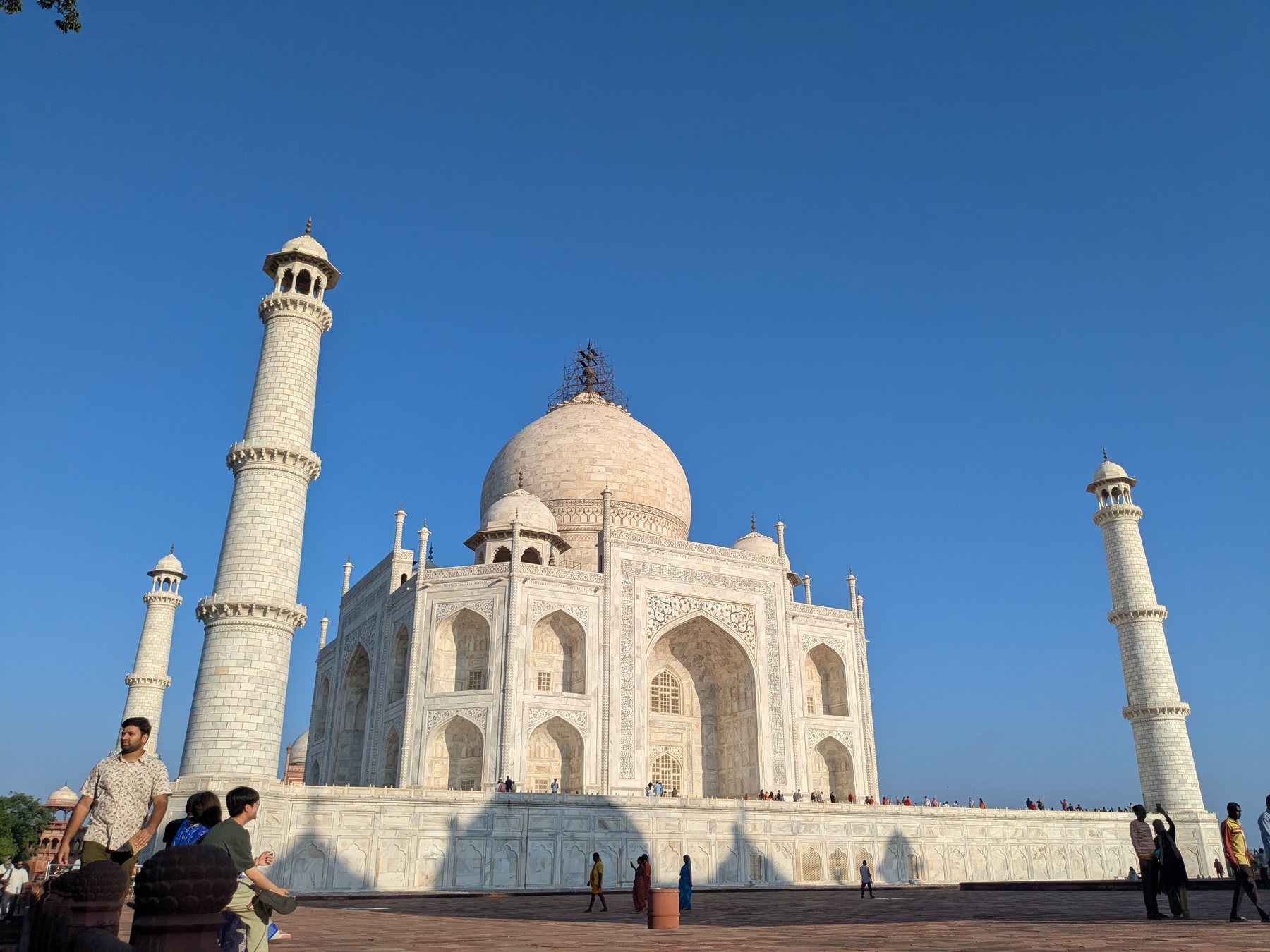
Opening frame
The monument and the city around it
Agra is easy to reduce to one perfect marble profile. The photographs from this visit resist that shortcut. They begin with the Taj Mahal’s precise symmetry, then place it in conversation with red sandstone ramparts, open courtyards, dry ridges, trees, and the slow width of the Yamuna landscape.
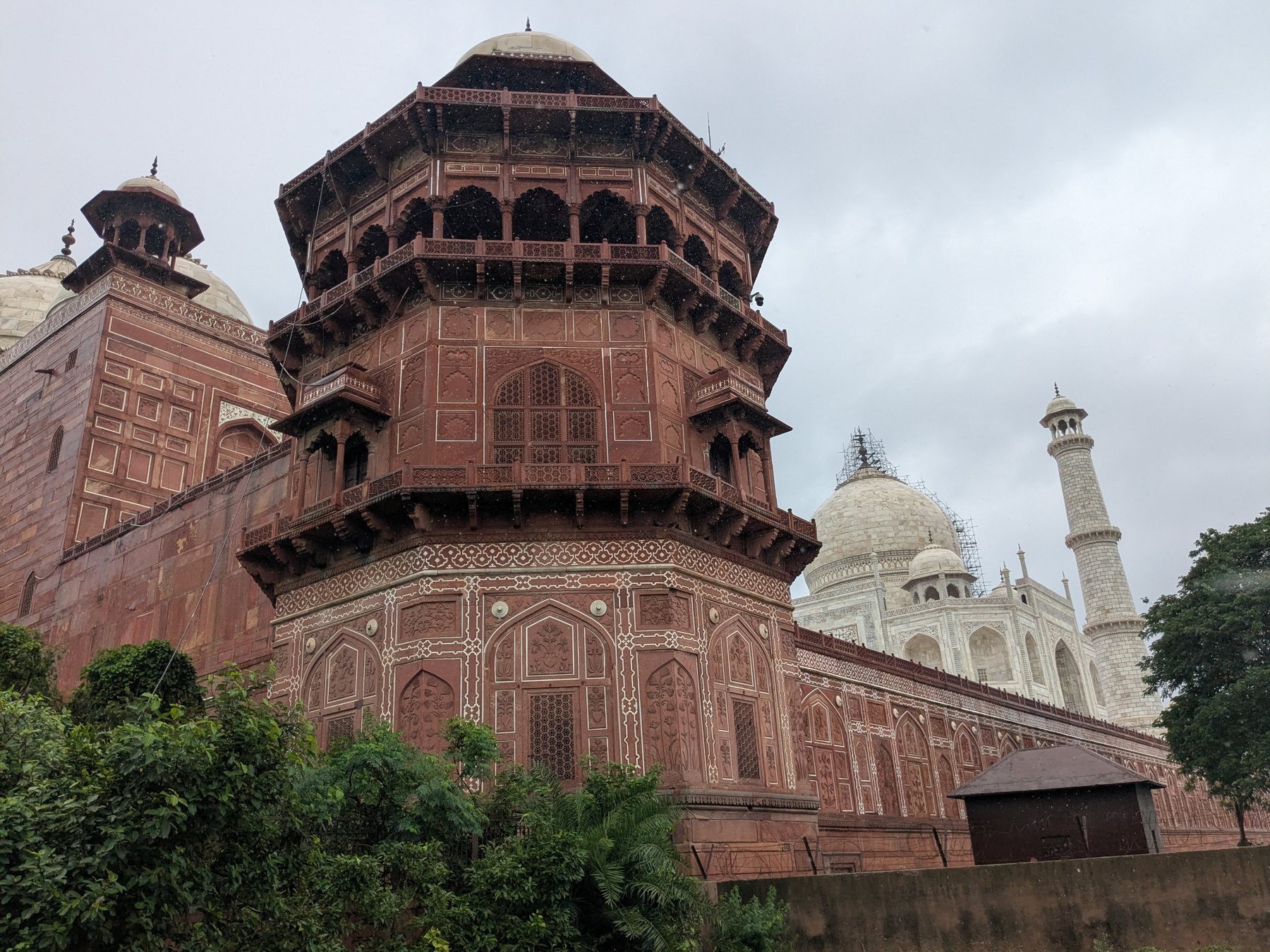
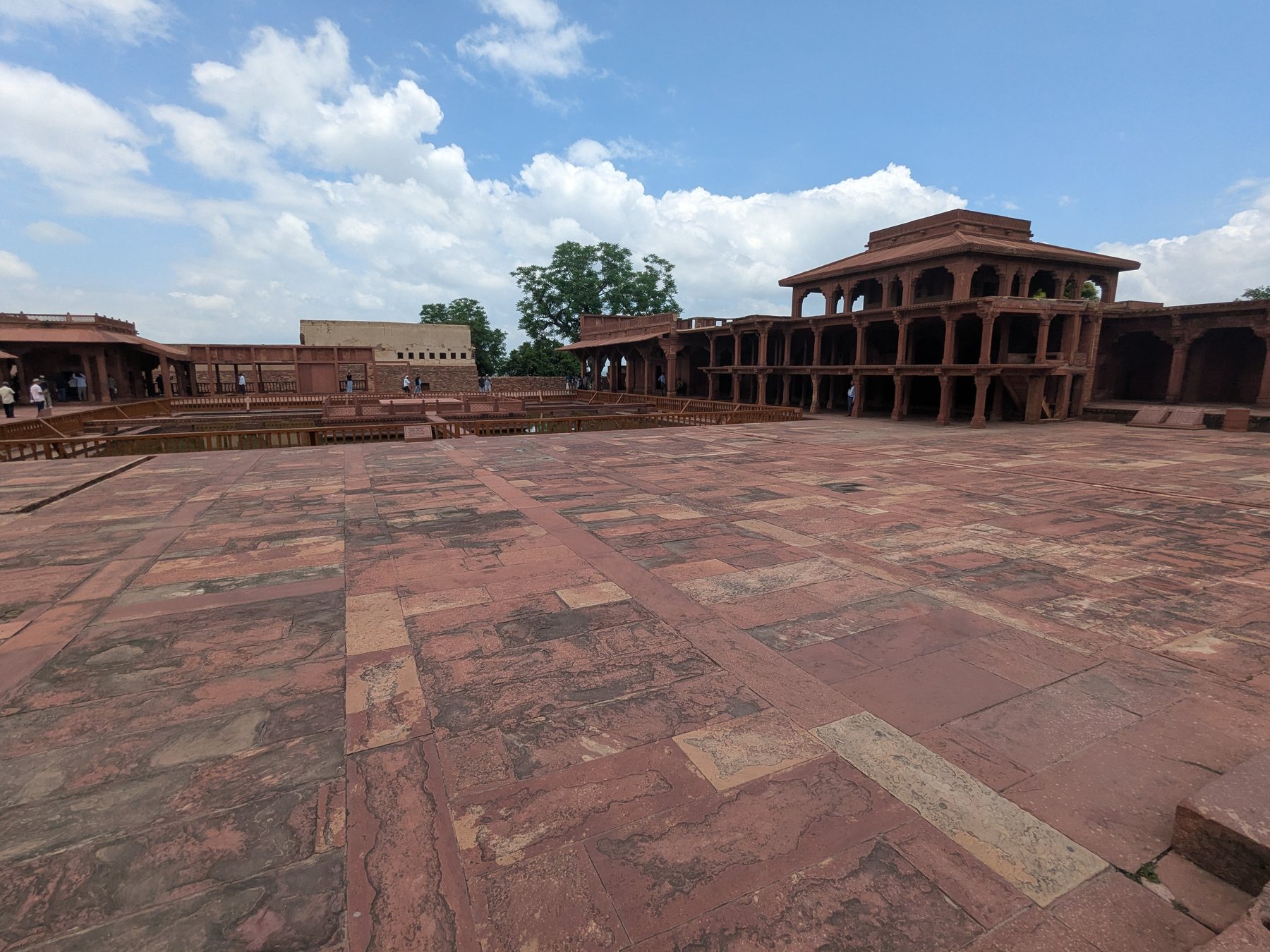
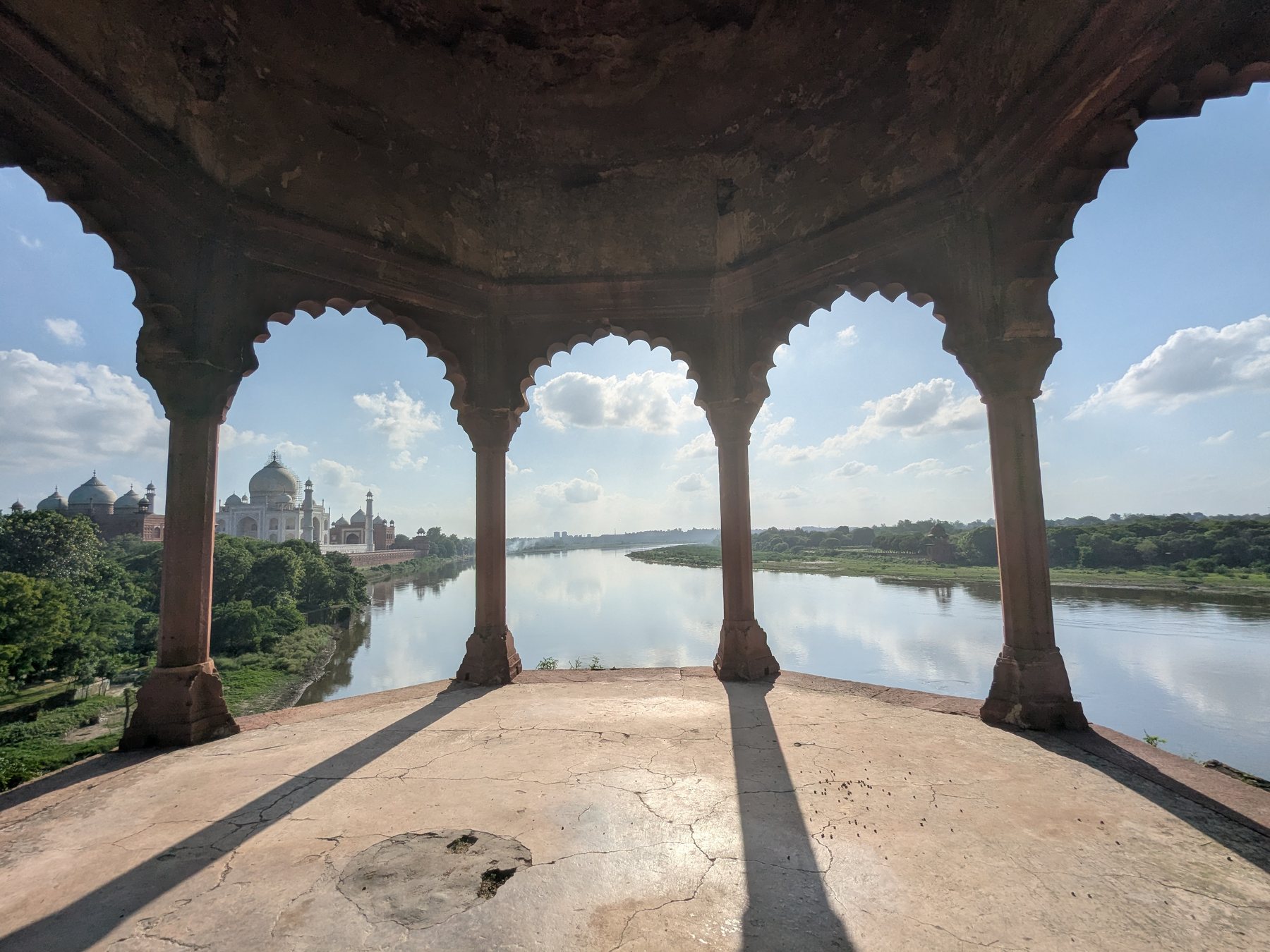
That change in scale is the story of the trip. Close up, the eye follows carved surfaces and repeating arches. From Agra Fort and the nature walk, the same building becomes a distant point of orientation. At Fatehpur Sikri, the visual language expands again into a whole planned imperial complex.
Three-day route
Build the visit in layers
Taj Mahal
Start early, leave time to walk the full garden axis, and look back as often as forward.
Agra Fort
Move through red sandstone courts and seek the framed views towards the Taj across the river.
Fatehpur Sikri
Treat the former imperial capital as a half-day excursion rather than an extra stop.
River landscape
Finish with a quieter garden or nature-walk perspective where the skyline can breathe.
Photo essay
Red sandstone, marble, and distance
The sequence below follows how the trip changed its point of view: from a monumental complex to a distant silhouette and then to an imperial city on a ridge outside Agra.
Before you go
Simple choices make a better visit
Begin early
Morning light is gentler, temperatures are usually kinder, and the main garden is easier to read.
Keep one half-day open
Fatehpur Sikri sits outside central Agra. Giving it its own block avoids rushing both sites.
Travel light
Security rules can limit what enters protected monuments. Check current official guidance.
Look beyond the gate
The best understanding comes from pairing close architectural detail with views across the landscape.
Context
Official reading
Historical context was checked against UNESCO’s entries for the Taj Mahal, Agra Fort, and Fatehpur Sikri.